
Stretching is a powerful yet often overlooked part of a healthy lifestyle. It helps improve flexibility, reduce muscle tension, and prevent injuries. The best part? You don’t need special equipment or a gym membership to start stretching. This beginner’s guide will walk you through the basics of stretching at home, making it easy for you to incorporate this habit into your daily routine.
Why Stretching Matters
Stretching isn’t just for athletes or dancers. Everyone can benefit from regular stretching because it:
– Increases flexibility and range of motion
– Reduces muscle stiffness and soreness
– Improves circulation and posture
– Helps relieve stress and promotes relaxation
– Prepares your body for physical activity
By dedicating just 10–15 minutes a day, you can notice significant improvements in how your body feels and moves.
Getting Started: Stretching Basics
Before you begin, keep these tips in mind:
– Warm up first: Stretch after light activity like walking or marching in place for 5 minutes. Your muscles stretch best when warm.
– Move gently: Stretch slowly and smoothly—avoid bouncing or jerking movements.
– Breathe deeply: Inhale as you prepare, exhale as you hold the stretch.
– Listen to your body: Stretch until you feel a gentle pull, not pain. Ease off if you feel discomfort.
– Hold each stretch: Aim for 15–30 seconds, repeat 2–4 times per stretch.
– Stay consistent: Stretching regularly yields the best results.
Essential Stretches for Beginners
Here are some beginner-friendly stretches you can try at home. These target large muscle groups and help improve overall flexibility.
1. Neck Stretch
– Sit or stand up straight.
– Slowly tilt your head toward your right shoulder until you feel a stretch on the left side of your neck.
– Hold, then switch sides.
2. Shoulder Roll
– Lift your shoulders toward your ears.
– Roll them backward in a circular motion 5 times.
– Repeat rolling forward.
3. Chest Stretch
– Stand facing a wall or door frame.
– Place your right palm on the wall at shoulder height.
– Gently turn your body away from the wall until you feel a stretch across your chest.
– Hold and switch sides.
4. Seated Spinal Twist
– Sit on the floor with your legs extended.
– Bend your right knee and cross it over your left leg.
– Place your right hand behind you and left elbow outside your right knee.
– Gently twist your torso to the right.
– Hold and repeat on the left side.
5. Hamstring Stretch
– Sit on the floor with legs extended straight.
– Slowly lean forward from your hips and reach toward your toes.
– Keep your back straight and knees slightly bent if necessary.
– Hold the stretch.
6. Quadriceps Stretch
– Stand near a wall or chair for balance.
– Bend your right knee and grasp your ankle or foot with your right hand.
– Gently pull your foot toward your buttocks.
– Hold and switch legs.
7. Cat-Cow Stretch (Spine Mobility)
– Start on hands and knees in a table-top position.
– Inhale and arch your back, lifting your head and tailbone (Cow pose).
– Exhale and round your spine, tucking your chin and tailbone (Cat pose).
– Repeat slowly 5–10 times.
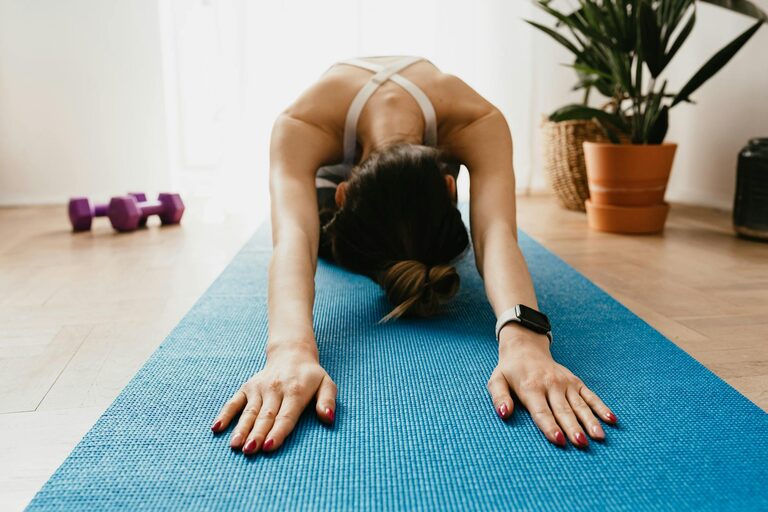
8. Child's Pose
– Kneel on the floor, sit back on your heels.
– Reach your arms forward and lower your chest toward the floor.
– Relax and hold the stretch for 30 seconds or more.
Creating a Stretching Routine at Home
To make stretching part of your daily life, try these steps:
- **Set aside time:** Choose a consistent time — morning, before bed, or after exercise.
- **Prepare your space:** Use a yoga mat or soft surface for comfort.
- **Start with warm-up:** Walk or gently move your body to get muscles ready.
- **Follow a sequence:** Start from the neck down to legs or whole body stretches.
- **Balance your routine:** Stretch both sides of your body evenly.
- **Stay hydrated:** Drink water to keep muscles supple.
- **Keep a journal:** Track how you feel after stretching sessions.
Safety Tips for Stretching at Home
– Avoid overstretching or forcing your body into uncomfortable positions.
– If you have any existing injuries or health conditions, consult a healthcare professional before starting new stretches.
– Stop immediately if you experience sharp pain or dizziness.
– Use props like straps or cushions if needed to modify stretches comfortably.
Conclusion
Stretching at home is a simple, cost-free way to improve your flexibility and overall wellness. With just a few minutes each day, you’ll feel more relaxed, less stiff, and ready to take on your day. Remember to be patient and consistent, and enjoy the benefits of a more limber, healthier body!
Feel free to bookmark this guide and revisit it whenever you need an easy stretch session at home. Happy stretching!